Unseen Influences – Part 10/12
Can Family Emotional Patterns Affect Our Lives?
Can relationship, fear, and emotional patterns learned in a family repeat in our lives? We separate attachment, learning, intergenerational transmission, epigenetics, and spiritual ideas of ancestral burden.
Heart to heart, warm greetings…
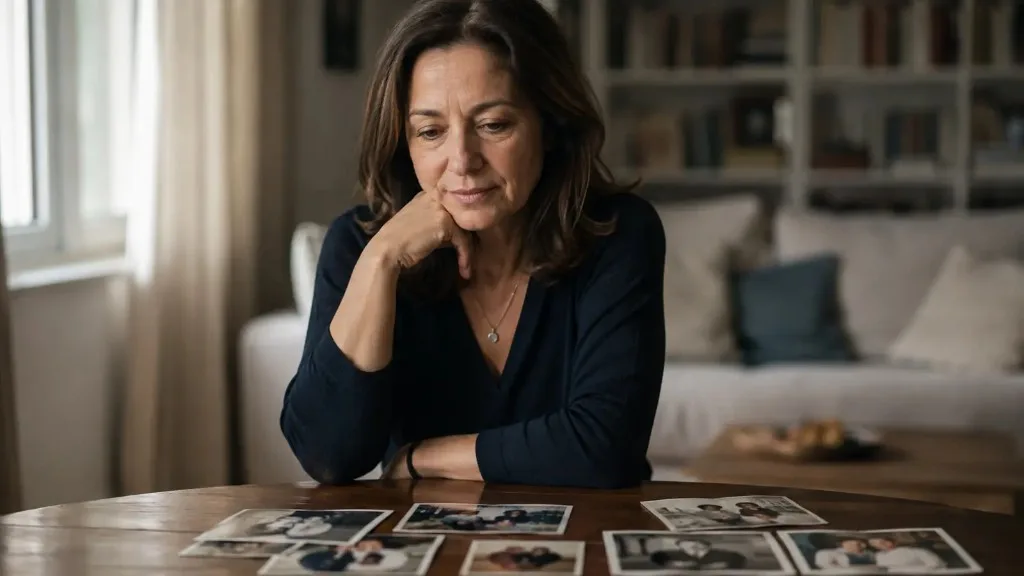
Sometimes, in the middle of an argument, we hear our mother's words coming from our own mouth. Sometimes we carry a fear that was never discussed in the family and fall silent about the same subject without knowing why. Sentences such as “Women in our family always live this way” or “Men in our family don't show emotion” can become invisible rules for our lives.
Family influence may be unavoidable, but not everything inherited from family is destiny. What was learned can be relearned, ways of relating can change through new experiences, and a person can choose a different path without rejecting their family.
“Knowing our roots does not mean we must carry the same branch forever.”
In some families the same sentences pass from generation to generation: “You can’t trust anyone in our family.” “Money is hard to earn.” “Don’t show your feelings.” “You have to hold the family together.”
Years later a person may find themselves in similar relationship, fear, or responsibility patterns they never consciously chose. Then phrases like “transmission from ancestors” or “family destiny” may be used.
What does science say? Family effects really can transmit across generations; but the paths are complex — learning, attachment, social conditions, caregiving behaviour, and some biological research areas. Simple lines like “trauma is written into DNA and passes unchanged to grandchildren” go far beyond what human data support.
Short Answer: Yes, Family Patterns Can Affect Us — but That Is Not Destiny
Children learn relationship not only from what is said but from what they see. How emotions are expressed, how conflict is resolved, how closeness and distance are built can create repeating behaviour patterns in the family.
Attachment research also shows intergenerational links between parents’ attachment representations and children’s attachment patterns. A large meta-analysis found meaningful transmission, but parental sensitivity did not explain the whole relationship. [1]
1. The Simplest Path: Modelling and Learning
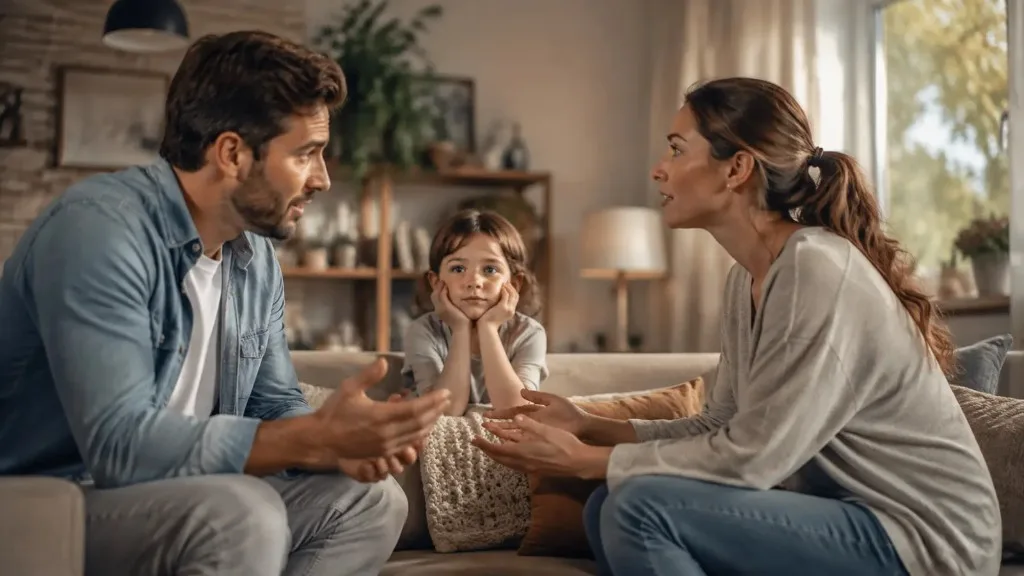
If a child sees anger expressed by shouting, they may learn that as the only relational language. If feelings are always hidden, they may infer “strong people don’t speak.” If one person always rescues everyone, the line between care and love may blur.
No genetic mechanism is required for this transmission. Daily repetition, observation, reward–punishment, and family roles are powerful enough as learning tools.
2. How Can Attachment Continue Across Generations?
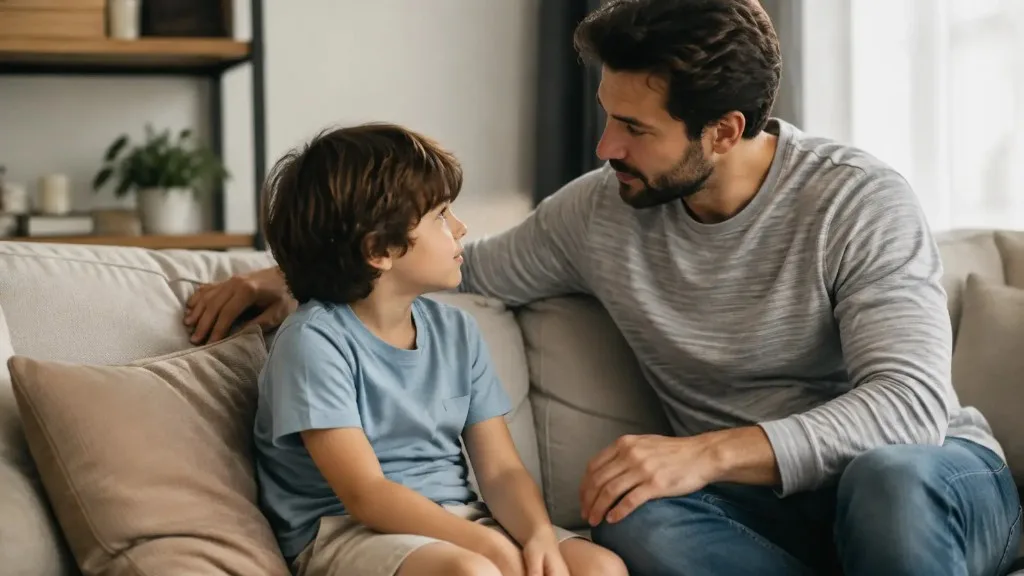
Attachment theory proposes that children develop ways of regulating security and closeness in relationships with caregivers. Meta-analytic work has found links between adults’ attachment representations and their children’s attachment. [1]
But transmission is not perfect. Siblings in the same family can have different experiences; parents can change; other safe relationships can form new patterns. So attachment should not be told as unchangeable destiny.
3. Family Stories and Beliefs
Families transmit stories as well as behaviour. Sentences like “men in our family are like this,” “women must always be strong,” or “if you get rich you’ll be alone” can become filters for interpreting reality.
A person may think these beliefs are their own because they heard them very early. Awareness creates the first split: “Is this a value I choose today, or a sentence normalised in my family?”
4. What About Epigenetics?
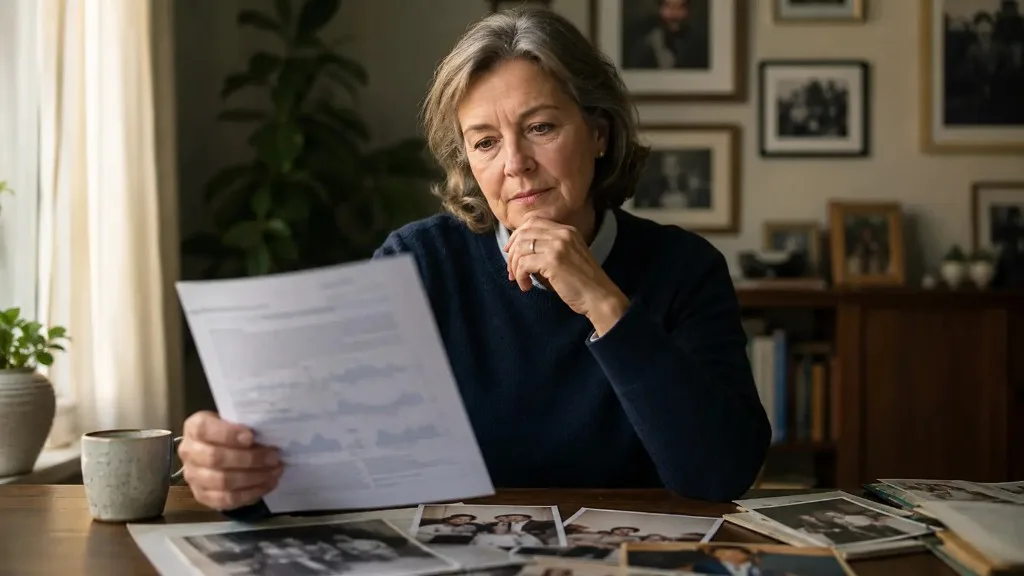
Epigenetics studies biological mechanisms related to regulating gene expression without changing DNA sequence. In animals, some environmental effects have been studied for intergenerational biological traces. In humans, proving intergenerational and especially transgenerational epigenetic transmission is much harder.
Jawaid and colleagues’ review of post-trauma epigenetic transmission in humans notes interesting findings but serious difficulty separating causality, cell type, confounders, and true germline transmission. [2]
Yehuda and Lehrner also discuss intergenerational trauma effects in biological terms, noting the field is promising but complex. [3]
5. Why Is “Trauma Is Written into DNA” Too Simple?
In popular content epigenetics is often presented as “your ancestors’ trauma is recorded in your DNA.” That wording is scientifically too definite.
Post-trauma effects can appear across generations in a family; but they cannot be explained by epigenetics alone. Parenting behaviour, economic conditions, family narratives, social stress, migration, discrimination, and children’s direct experience are among many paths.
Also, the presence of epigenetic change does not automatically mean a specific feeling or destiny was transmitted.
6. Ancestral Transmission in Spiritual Traditions
Many spiritual traditions include concepts like loads from the family line, connection with ancestors, generational karma, or family field. These frames can help a person make sense of repetitions in life.
But spiritual “ancestral load” is not the same as epigenetics. Using epigenetics as laboratory proof for a spiritual claim is not sound.
Spiritual narrative may matter elsewhere: a person can ask, “What am I carrying from my family, what do I want to continue, what do I want to release?”
7. The Angels Akademi View: “Family Pattern,” Not “Family Destiny”
In Angels Akademi content, when using destiny language it matters to preserve the person’s room for change. Being affected by the family is not the same as having to repeat it.
We can separate three layers:
Learned: behaviours I saw at home and took as normal.
Transmitted social conditions: economy, migration, care load, family roles.
Spiritual interpretation: the symbolic frame a person uses around lineage, meaning, and belonging.
Biological/epigenetic research should be described as a separate scientific field, with its uncertainties.
8. Nine Questions to See Your Family Pattern
• Did our family talk openly about emotions?
• During conflict, who went silent, who shouted, and who mediated?
• What three sentences did I hear most often about money?
• Which fears about close relationships kept returning?
• Who was “the strong one” in the family, and what did that role cost?
• Whose needs were always postponed?
• Which role do I automatically take on today?
• Does this role still serve me?
• What do I want to preserve from my family, and what do I want to do differently?

9. Can the Cycle Be Broken?
Yes. People can change patterns learned from the family through new relationship experience, therapy, education, safe social bonds, and conscious behaviour change.
The most important purpose of discussing “intergenerational transmission” is not to create fear, but to make room for change visible. The past may explain us; it does not dictate our future.
Holding Loyalty to Your Family and Yourself Together
Changing a family pattern can sometimes create guilt. You may wonder, “My mother lived this way; would choosing differently be unfair to her?” or “Am I distancing myself from my family?”
Changing a pattern does not mean denying your family. We can understand the opportunities available to earlier generations, the times they lived through, and the burdens they carried while choosing not to continue behaviour that harms us today.
Five Practical Ways to Change the Pattern
1. Write down the phrases repeated in your family and the emotions that were forbidden.
2. Notice where the same rule appears in your life today.
3. Choose one practical new behaviour to replace the old response.
4. Distinguish guilt caused by a new behaviour from evidence that the behaviour is truly wrong.
5. Seek professional support when trauma, violence, or significant loss of functioning is involved.
Change is often not a dramatic break, but a series of small, conscious choices made again and again.
10. Common Mistakes
Mistake 1: My ancestor’s trauma was copied exactly into my DNA.
Such a direct, general conclusion cannot be drawn in humans. Epigenetic research is complex and has important limits on causality. [2][3]
Mistake 2: If there is a pattern in the family, I will live it too.
No. Risk and influence are not destiny. New environments and choices can create change.
Mistake 3: Every family problem is epigenetic.
No. Learning, social conditions, and direct experience are often much more visible paths of transmission.
Mistake 4: Spiritual ancestral-load work is scientifically proven by epigenetics.
No. These are different conceptual fields.
Conclusion: We Are Inside a Story That Began Before Us — but We Can Write the Next Sentence
Our family leaves us language, ways of relating, fears, strengths, values, and roles. Some of these are precious; some may no longer serve us.
Science studies intergenerational effects through learning, attachment, environment, and possible biological paths. Spiritual traditions approach the same experience through lineage and meaning.
The aim of awareness is not “My family did this to me,” but moving toward: “What continues in me, and what do I want to choose consciously from here?”
If You Want to Deepen This Journey
Previous part: Can a Thought Have a Real Effect on the Body?
Part 09: Can a Thought Have a Real Effect on the Body?
Next part: What Is a Personal Boundary and Why Does It Protect Our Energy?
Part 11: What Is a Personal Boundary and Why Does It Protect Our Energy?
To hear Maria Öcal discuss this subject in her own words, visit the Angels Akademi YouTube channel; for short practices and new posts, follow Angels Akademi on Instagram.
Visit the Angels Akademi YouTube channel
Follow @angelsakademi on Instagram
If you would like to explore your inner world more deeply through notes, questions, and intentions, discover the book The Light Never Went Out.
Discover The Light Never Went Out
Frequently Asked Questions
Do emotional patterns pass from the family?
Yes. Similar patterns can continue across generations through learning, caregiving behaviour, family roles, and social conditions.
Is trauma transmitted epigenetically?
Animal research is strong in some areas; in humans some links are reported, but proving true transgenerational causal epigenetic transmission is difficult and the field has important limits. [2][3]
Can family destiny change?
“Family destiny” is not a scientific diagnosis. Learned relational and behavioural patterns can change.
Are spiritual ancestral load and epigenetics the same?
No. One is a spiritual/meaning frame; the other is biological research on gene-expression regulation.
About the Author
Maria Öcal is the founder of Angels Akademi, an educator, and an author of The Light Never Went Out.
Sources and Editorial References
- 1. Verhage ML, et al. — Narrowing the transmission gap: meta-analysis of intergenerational transmission of attachment (2016)
- 2. Jawaid A, et al. — Impact of parental exposure on offspring: epigenetic transmission in humans, challenges and perspectives (2021)
- 3. Yehuda R, Lehrner A. — Intergenerational transmission of trauma effects: putative role of epigenetic mechanisms (2018)
- 4. Madigan S, et al. — The cycle of child maltreatment: meta-analytic evidence (2019)
Related